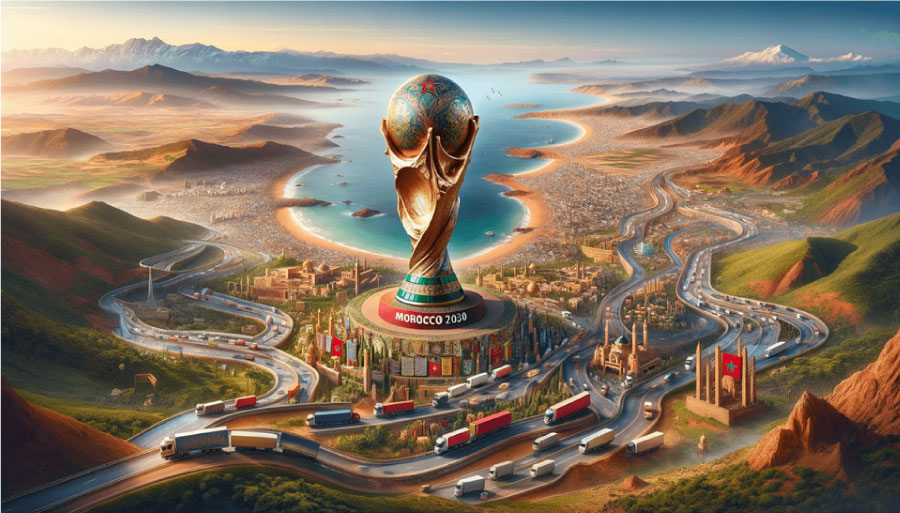
#How a Private Detective Can Support Investment for Morocco's 2030 World Cup
At the World Cup 2030 in Morocco, several sectors will offer major investment opportunities. These investments will not only meet the needs of the event, but also generate long-term economic benefits. Key areas for investment include:
1. Sport infrastructure
Stadiums and sports facilities: The organisation of the World Cup will require massive investment in the construction and renovation of stadiums. Investors may become involved in public-private partnership projects to build or renovate such infrastructure. After the event, these stadiums can be used for other sports competitions and cultural events.
Training centres: The construction of modern training centres for participating teams can also be a lucrative opportunity. These facilities can then be used for football academies or other sports.
2. Hotels and accommodation
Hotels and temporary accommodation: With hundreds of thousands of visitors expected, the need for accommodation will be important. Investing in hotels, tourist residences or even temporary accommodation (such as modular accommodations) offers an opportunity to earn short- and long-term income.
Airbnb and other rental platforms: It can be profitable to invest in the purchase or renovation of real estate for rent via platforms such as Airbnb. This allows you to enjoy the influx of tourists while valuing local real estate.
3. Tourism
Travel agencies and tourism services: Investing in companies offering tourist experiences (guided tours, cultural excursions) will capture international tourists who want to discover Morocco's heritage on the sidelines of matches.
Ecotourism and sustainable tourism: With increasing demand for environmentally friendly travel, investing in ecotourism projects could attract a specific clientele interested in off-road experiences.
4. Transport and logistics
Air and land transport: Investments in transport infrastructure (bus companies, car rental, shuttles) are essential to manage visitor flows. Partnerships with transport companies for logistics and mobility can be very cost-effective.
Urban mobility: With planned congestion in cities, investments in innovative transport solutions such as self-service bike systems, electric vehicles, or shared mobility solutions will be crucial.
5. Technology and digital
Smart Stages: Investing in smart stadium technology (Wi-Fi, mobile applications, ticketing systems, video surveillance) is an opportunity for technology companies. These solutions will improve spectator experience while generating revenue from the data collected.
Digital platforms and e-commerce: The digital sector will explode during the World Cup, including online ticketing, travel booking platforms and mobile payment solutions.
6. Restoration and trade
Restaurants, bars and food trucks: Investing in the catering sector, especially in host cities, will be crucial to meeting the massive demand for food and drink during games and outside. Food trucks can offer a flexible and inexpensive option.
Derivative sales: The derivatives market (maillots, souvenirs, gadgets) will be expanding during the event. Opening stores or investing in e-commerce can generate considerable profits.
7. Security and surveillance
Physical and digital security: With increasing crowds and events, there will be a strong demand for security solutions (surveillance cameras, drones, private security, access control systems). Security companies can take advantage of this opportunity.
Cybersecurity: Investing in the protection of computer systems and sensitive data will be a priority, as the event will be a potential target for cyberattacks.
8. Real estate
Residential and Commercial Real Estate: Investing in real estate located close to sports and tourism infrastructure could generate interesting returns, especially if demand increases as the World Cup approaches.
Shopping centres and leisure areas: The construction or renovation of shopping centers, entertainment zones or multi-service complexes in large host cities such as Casablanca, Rabat or Marrakech can meet the demand of visitors.
9. Renewable energy and sustainable development
Clean Energy: With a focus on sustainability, investments in renewable energy (solar, wind) to feed stadiums and infrastructure will be encouraged by the authorities. Morocco has an ambitious energy strategy, and the World Cup could accelerate investment in this area.
Waste Management and Recycling: Investing in innovative solutions for waste management during the World Cup can also be a cost-effective option, with a positive impact on the environment.
10. Media and entertainment
Media and broadcasting rights: Media and communication companies can invest in the coverage of the event, whether through broadcast rights, streaming platforms, or exclusive digital content.
Side events: Investing in cultural and artistic events on the sidelines of the World Cup (concerts, festivals) will attract more visitors and generate additional revenues.
Conclusion
In order to maximize investment returns at the 2030 World Cup in Morocco, it is crucial to diversify investment sectors while targeting infrastructure that will benefit